

Italy's Constellation of Three-Star Tables
A gastronomic atlas — the eleven Italian restaurants currently holding three Michelin stars, and how to assemble a journey around them.
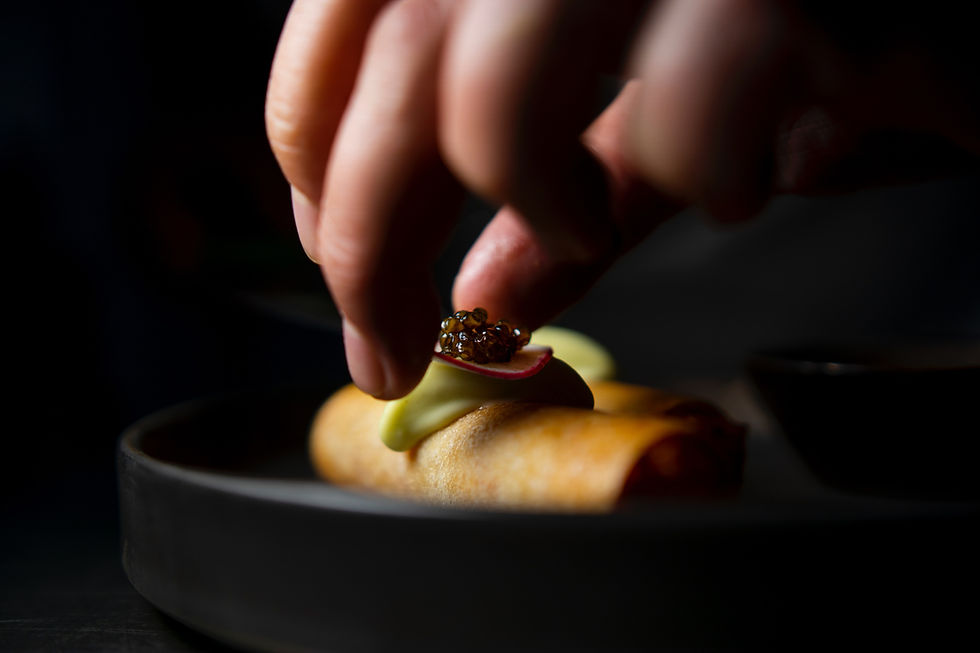
The high gastronomic geography of Italy, in the current Michelin guide, consists of eleven three-starred restaurants. They are scattered across the peninsula in a pattern that bears a certain logic — Piedmont and Lombardy in the north, two in the Dolomites, one each in Tuscany, Umbria, the Roman countryside, the Amalfi Coast, the Tyrrhenian, and Sicily — and a journey assembled around any three or four of them will, if planned at the right pace, be among the most concentrated weeks of high cuisine that European travel currently offers.
What the Stars Currently Are
The Italian three-stars in 2026, with the caveat that the guide updates each November, are: Da Vittorio in Brusaporto outside Bergamo, run by the Cerea family; Le Calandre in Rubano outside Padua, run by Massimiliano Alajmo; Piazza Duomo in Alba, run by Enrico Crippa; Dal Pescatore in Canneto sull'Oglio, run by the Santini family for four generations; Sankt Hubertus at the Hotel Rosa Alpina in San Cassiano in the Dolomites, run by Norbert Niederkofler; Reale in Castel di Sangro in Abruzzo, run by Niko Romito; Enoteca Pinchiorri in Florence, the longest-tenured of the constellation; Quattro Passi at Nerano on the Amalfi Coast, run by the Mellino family; Uliassi in Senigallia on the Adriatic, run by Mauro Uliassi; Don Alfonso 1890 at Sant'Agata sui Due Golfi above Sorrento, run by the Iaccarino family; and Mudec in Milan, run by Enrico Bartolini.
Each of these restaurants has, in our reading, a distinct character. The Cerea kitchen at Da Vittorio is the most classically grand of them; the Alajmo kitchen is the most cerebral; Niederkofler's is the most regionally rooted; Romito's is the most architecturally pure; the Pinchiorri cellar is, separately, the deepest in Italy at over four thousand labels.
A Northern Itinerary
The five three-stars within reach of Milan — Da Vittorio, Dal Pescatore, Le Calandre, Piazza Duomo, and Mudec — can be assembled into a single seven-night itinerary that constitutes one of the most demanding gastronomic weeks in Europe. We base our clients on this kind of journey at three properties: a country estate in Franciacorta as the base for Da Vittorio and Mudec, a quiet hotel in Mantua for Dal Pescatore, and a property in the Langhe for Piazza Duomo. The drives between are short and beautiful, and we arrange a private driver throughout so that the wine pairings — which at this level are not optional — can be enjoyed without compromise.
We pace these journeys carefully. Two three-star dinners in three days is a plausible rhythm; two in two days is the absolute maximum and is generally not advisable. The palate, the constitution, and the conversation all benefit from a rest day between major meals, ideally one filled with a single, lighter, perhaps single-Michelin-starred lunch and a long walk or a vineyard visit in the afternoon.
A Central Itinerary
The central Italian three-stars — Reale in Castel di Sangro, Enoteca Pinchiorri in Florence, and Don Alfonso above Sorrento — make a more dispersed but equally compelling sequence. Reale, in the small Abruzzese town of Castel di Sangro, is the most architecturally singular of the Italian three-stars; the restaurant occupies a former monastery in the Apennines that Niko Romito and his sister Cristiana have transformed into something close to a contemporary monastic complex. The visit is best done as a two-night stay with a private driver, since the location does not lend itself to a quick stop.
The Pinchiorri visit in Florence is the more conventional one — an evening in a city most of our clients are visiting anyway — but the cellar tour, arranged in advance, is one of the most considerable wine experiences in Italy. Don Alfonso, finally, is the southern member of the trio, perched above the Bay of Naples in a small village that has preserved a remarkable agricultural integrity; the produce in the kitchen is grown on the family's own estate, and the visit can be combined with a stay on the Amalfi Coast or in Capri.
What These Meals Are For
We do not arrange three-star journeys for clients who are not specifically interested in them. They are demanding weeks. The meals are long — four hours is typical, five is not unusual — and the pace requires an investment of attention that not every traveller, even at this level, will find rewarding. Some of our most experienced and well-fed clients prefer, at home and abroad, a more austere style of eating; for them, a journey of this kind would not represent a service.
But for the client whose interest in cuisine is genuine and whose appetite for the long table is undimmed, a week of this kind is among the most distinctly Italian experiences in our practice. The eleven kitchens, taken collectively, represent a national cuisine at its highest reach: technically rigorous, regionally rooted, and quietly confident in a way that the high cuisine of other European countries rarely is. For the right traveller, it is a week that earns its place in the journal of the year.
