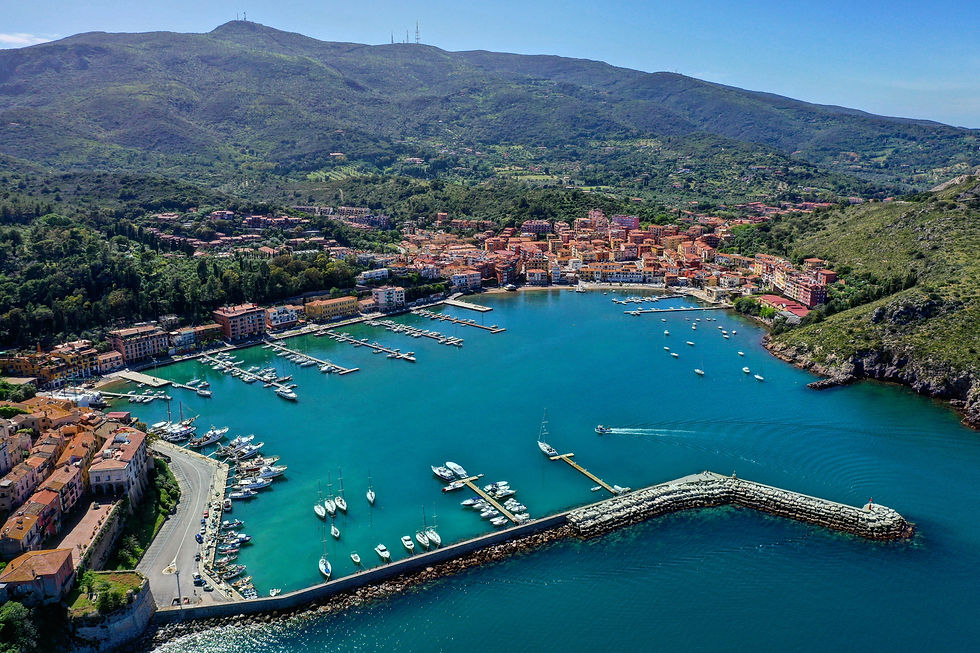
From Cannes to Capri by Yacht
A seven-day Mediterranean passage at the season's first crest — the route, the anchorages, the meals taken on deck.

There is a week most years, falling somewhere between the close of the Cannes Film Festival and the opening of the Monaco Grand Prix, when the western Mediterranean is at its most seductively underused. The boats are in the water. The harbour towns are open. The mistral has eased. The temperature is a perfect twenty-three by midday. And yet the heavy charter season has not begun. For the seven days between these two events, a private passage from Cannes to Capri is, for our money, the most considered week of yachting the season offers.
The Boat
The choice of yacht is the first conversation, and it is the conversation that determines almost everything else. For a passage of this kind we typically recommend a motor yacht of between thirty-five and forty-five metres, with a draft that allows access to the Mediterranean's smaller harbours and a cruising speed of around twelve knots. Sailing yachts are an option for clients with the patience and the affinity, but the seven-day window does not particularly reward sail; the passage between the major anchorages calls for the predictability of a motor.
We work with several yacht-broker offices whose central charter inventories cover most of the available Mediterranean fleet. The boats we recommend most often for this passage tend to be Sanlorenzo and Benetti hulls of recent build, with crews of eight to twelve, and a chef who has been with the boat at least three seasons. Continuity of crew matters more than the absolute novelty of the hull. A boat that has been crewed by the same captain for five years runs differently from a boat that has not.
The Passage
The seven-day route we propose most often is as follows. Day one, board at the Vieux Port of Cannes; lunch on board on a slow passage along the Côte d'Azur to Saint-Tropez, anchoring in the Baie de Pampelonne for the afternoon and dinner.
Day two, the passage south to Porto Venere on the Ligurian coast, with a stop at the Île de Porquerolles for a swim.
Day three at the Cinque Terre, with shore excursions to Vernazza and Monterosso al Mare on a tender, and a dinner at Vissani's coastal outpost when running.
Day four, an early passage south to Portofino and Santa Margherita Ligure for lunch at Da U Batti, then onwards to Lerici for the night.
Day five, the long passage south to Giglio, with anchorage in the marina at Giglio Porto and dinner ashore at Da Ruggero.
Day six, around the Argentario peninsula and on to Ponza in the Pontine Islands, anchoring at Cala Feola for the swim.
Day seven, the final passage south to Capri, with a celebratory dinner at Da Tonino or at the Capri Palace's Riccio.
The passage is approximately three hundred and fifty nautical miles end to end, and the timings are deliberately conservative to allow for weather. The boat moves more by night than by day, which keeps the daylight hours for swimming, shore visits, and lunches at anchor.
The Anchorages
Anchorages, on a passage of this kind, are the hidden infrastructure of the trip. A boat is not a hotel; the choice of where to anchor for a swim, for a lunch, for a sunset, structures the day far more than any printed itinerary suggests. We work with the captain in the planning phase to identify the half-dozen swim stops that, weather permitting, will define the week. The bay below Le Sirenuse at Positano (yes, one can anchor and swim there in the right weather), the small cove at Punta Carena on Capri's western side, the Faraglioni at sunset, the Grotta di Mezzogiorno on Ponza, the small bay at Pianosa with its absurdly clear water, the lunch anchorage at Marina di Praiano off Pellecchia.
Each of these is a piece of the trip that, in our experience, the client will speak about afterwards. The captain who knows the coast — and the captains we work with do — can read the wind on the morning of and decide whether the day's plan should be the western Capri anchorages or the eastern. This kind of decision-making is what makes the difference between a charter that goes well and a charter that becomes the family story.
The Tables, Land and Sea
Yachting at this level is half a culinary experience, and the boat's chef is, day for day, more important to the trip than the captain. The provisioning we plan with the chef, before the boat sails: the morning bread from a particular bakery in Naples, the buffalo mozzarella delivered to the dock at Massa Lubrense, the day-boat fish bought at the morning market at Procida, the Brunello and the Vermentino loaded in cases at Cannes.
Shore meals we plan equally carefully. We do not, on a charter of this kind, send our clients to the obvious tourist tables; the boat's chef will, on most nights, cook better than the lunch restaurant. We send them, instead, to the places that one cannot replicate on board: a meal of crudi at Da Adolfo at the Spiaggia di Laurito, accessible only by boat. A long lunch at Da Tonino in Capri's interior, which still does the rabbit alla cacciatora as it should be done. The langoustines at Mammà on Capri, kept on the list for the rare and proper week.